Hammam
Description
Hammam, also known as a Turkish bath or steam bath, is a traditional Middle Eastern and Mediterranean bathing and cleansing ritual. It involves a combination of steam, scrubbing, and massage to cleanse and relax the body. Hammam facilities typically consist of a steam room, heated marble or stone benches, and a central platform for the treatment.
Recommended For
Hammam is recommended for individuals looking for a deep cleansing and relaxation experience. It can be suitable for people without specific health conditions, but it's essential to consider personal preferences and tolerance for heat and steam.
Benefits
• Deep cleansing of the skin through steam and exfoliation.
• Relaxation and stress relief.
• Improved circulation and muscle relaxation.
• Enhanced skin texture and a refreshed feeling.
Contraindications
• People with certain medical conditions such as cardiovascular issues, respiratory problems, or skin sensitivities should consult with a healthcare professional before undergoing a Hammam treatment.
• Pregnant individuals may need to avoid Hammam due to the high temperatures involved.
How it works
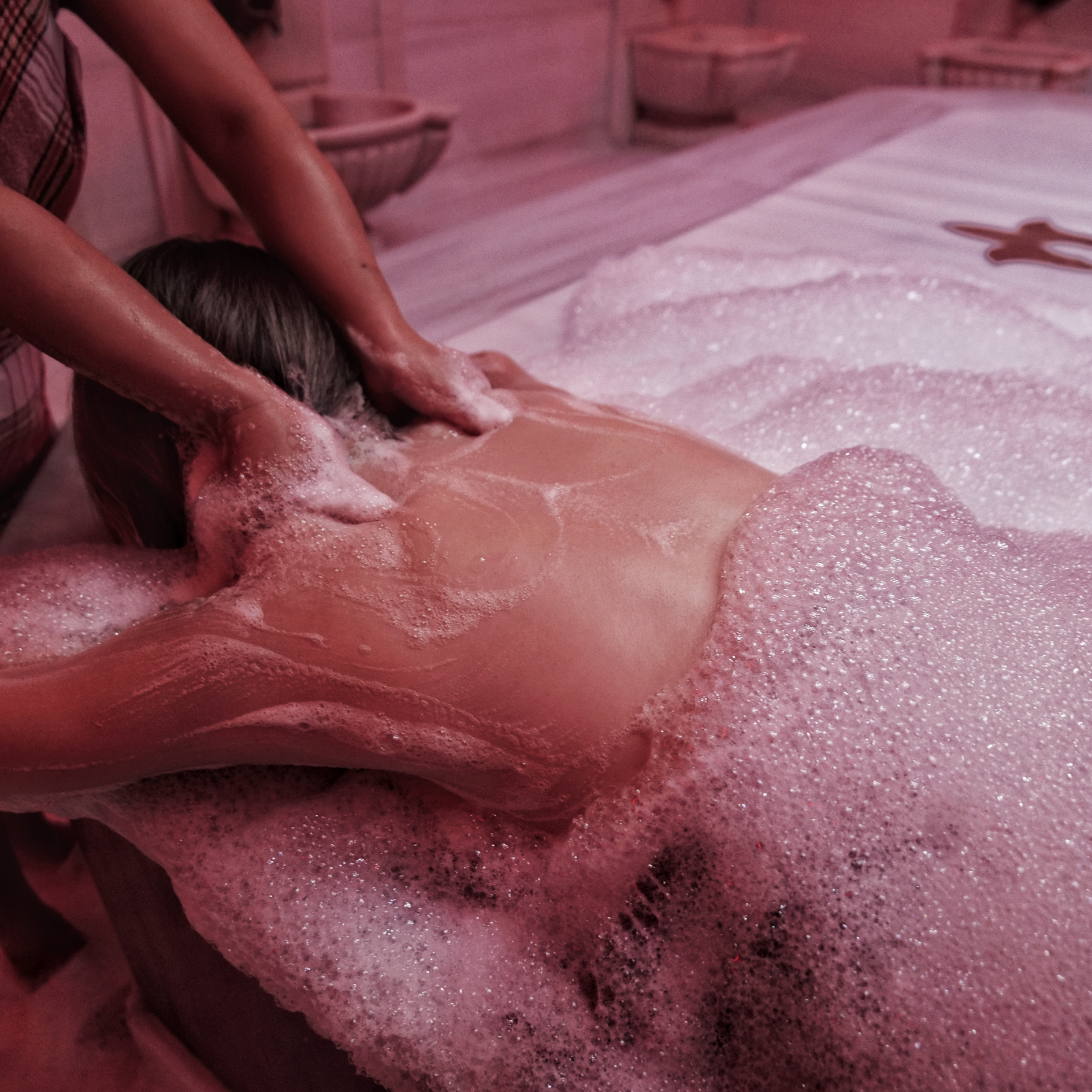
A typical Hammam session starts with spending time in a steam room to open pores and soften the skin. Then, a skilled practitioner uses a special glove or brush to exfoliate the skin by scrubbing away dead skin cells. After exfoliation, the client is often rinsed with warm water and may receive a relaxing massage using oils or soap. The entire process is designed to promote cleanliness, relaxation, and well-being.
Supporting Evidence
The benefits of steam baths and exfoliation for the skin have been recognised for centuries. While there may not be extensive scientific studies on Hammam specifically, the individual components of the treatment (steam, exfoliation, and massage) have well-documented benefits for skin health and relaxation.
Origin & History
Hammam has a long history dating back to ancient Roman and Byzantine times. It was later adopted and perfected by the Ottomans, becoming a central part of their bathing and cleansing rituals. Today, Hammam is still a popular tradition in many Middle Eastern and Mediterranean cultures.
Proprietary or generic?
Hammam is a traditional bathing and cleansing ritual that is not proprietary. However, individual Hammam facilities or spas may brand their specific treatments and experiences.
For Wellness Business
Staffing
Hammam practitioners, often known as "tellak" or "nattar," should have training and experience in providing Hammam treatments. They need to be skilled in the techniques of exfoliation and massage.
Training
Training in Hammam techniques can be obtained through specialised training centres, beauty, and spa schools, or through apprenticeship with experienced practitioners.
Products & Equipment
Hammam typically requires a steam room, heated benches, exfoliating gloves or brushes, soap or cleansing products, and oils for massage. Some modern Hammam facilities also incorporate specialised lighting and music for a more immersive experience.
Facilities
Hammam facilities should be designed to provide a comfortable and authentic experience. This includes appropriate heating, ventilation, and the use of traditional materials like marble or stone for benches and surfaces.