Dermaplaning
Description
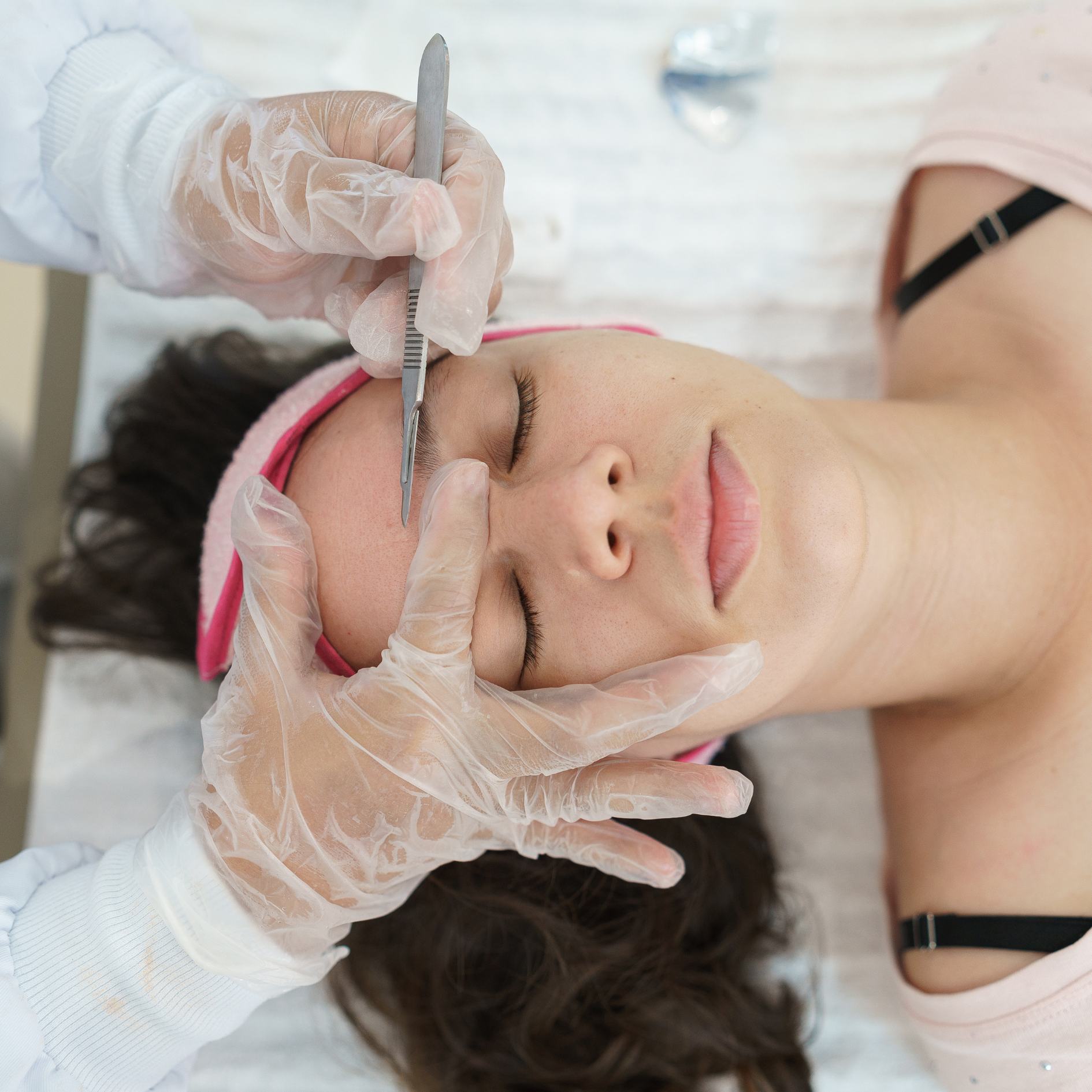
Dermaplaning is a non-invasive cosmetic procedure that involves the use of a scalpel or specialised blade to gently scrape away the top layer of dead skin cells and fine vellus hair (peach fuzz) from the surface of the skin. This exfoliation aims to reveal smoother, brighter, and more youthful-looking skin.
Recommended For
Dermaplaning is recommended for individuals seeking to address various skin concerns, including:
• Dull or uneven skin texture
• Fine lines and wrinkles
• Superficial hyperpigmentation
• Dry or rough skin
• Removal of vellus hair
• Improved absorption of skincare products
Benefits
Benefits of dermaplaning may include:
• Smoother and more radiant skin
• Enhanced skin texture and tone
• Reduced appearance of fine lines and wrinkles
• Better makeup application and product penetration
• Temporary removal of vellus hair
• Improved overall skin appearance
Contraindications
Dermaplaning may not be suitable for individuals with specific contraindications, including:
• Active acne or skin infections in the treatment area
• Recent use of isotretinoin (Accutane)
• Sunburned or irritated skin
• History of skin conditions like eczema or psoriasis during flare-ups
• Blood clotting disorders or use of blood-thinning medications
• Darker skin tones (increased risk of pigmentation changes)
How it works
Dermaplaning is performed by a trained skincare professional who uses a sterile scalpel or blade to gently glide over the skin's surface at a 45-degree angle. This action removes the outermost layer of dead skin cells (stratum corneum) and fine vellus hair. The procedure is painless and typically takes about 30 minutes.
Supporting Evidence
Dermaplaning is based on the principles of manual exfoliation and skin rejuvenation. While there may not be extensive scientific studies on dermaplaning specifically, exfoliation is a well-established practice in skincare and aesthetics.
Origin & History
The practice of dermaplaning has been used for many years by dermatologists and skincare professionals. It gained popularity in the beauty industry as a non-invasive method for skin exfoliation and rejuvenation.
Proprietary or generic?
Dermaplaning is a generic term for the manual exfoliation of the skin's surface and is not proprietary or trademarked. Various skincare brands and professionals offer dermaplaning services, but the therapy itself is a widely practised and established cosmetic procedure.
For Wellness Business
Staffing
Dermaplaning should be performed by licensed and trained skincare professionals, such as aestheticians or dermatologists. These individuals have the necessary qualifications and expertise to conduct the procedure safely.
Training
Training in dermaplaning techniques can be obtained through aesthetician programs, skincare workshops, or courses offered by reputable training providers. It's essential for practitioners to receive education on blade safety, skin assessment, and client care.
Products & Equipment
Dermaplaning requires a sterile scalpel or specialised blade, as well as disposable blades, gloves, and appropriate skincare products. Equipment should meet safety and sanitation standards.
Facilities
Facilities offering dermaplaning should have a clean and well-equipped treatment room with proper lighting and sterilisation facilities. Compliance with safety and infection control protocols is essential.