
Ear Candling
Description
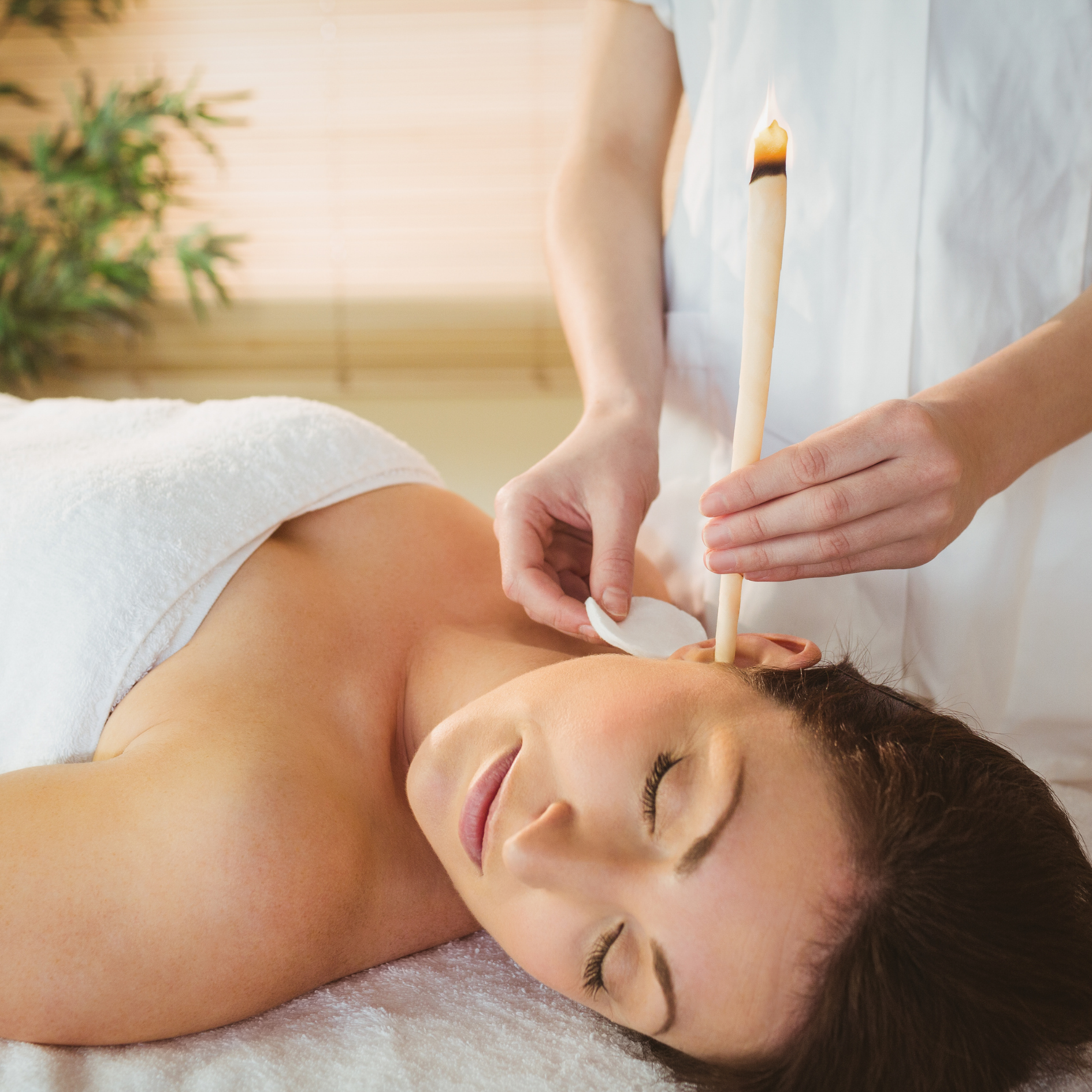
Ear candling, also known as ear coning or thermal-auricular therapy, is a complementary therapy practice that involves inserting a hollow, cone-shaped candle made of fabric soaked in wax or paraffin into the ear canal. The candle is then lit on the exposed end, and it is believed to create a mild vacuum that draws out earwax and impurities from the ear canal.
Recommended For
Ear candling is often recommended for individuals seeking relief from various ear-related issues, including:
• Earwax build-up or blockages
• Earaches or ear infections
• Tinnitus (ringing in the ears)
• Sinus congestion or pressure
• Stress and relaxation
Benefits
Benefits of ear candling, as claimed by proponents, may include:
• Improved hearing
• Relief from ear discomfort or pain
• Reduced earwax build-up
• Enhanced sinus drainage
• Stress relief and relaxation
Contraindications
Ear candling may not be suitable for individuals with specific contraindications, including:
• History of ear surgery or perforated eardrums
• Allergies to candle materials
• Active ear infections or injury
• Tubes or grommets in the ears
• Skin conditions or sensitivities near the ears
• Known hypersensitivity to heat or burns
How it works
Proponents of ear candling claim that the process creates a mild vacuum, which, in turn, draws out earwax and impurities from the ear canal. As the candle burns, warm air and smoke are believed to soften and loosen earwax, allowing it to be drawn into the candle. However, there is scepticism regarding whether ear candling is effective in this manner.
Supporting Evidence
Scientific evidence supporting the efficacy of ear candling is limited and controversial. Many medical professionals and health organisations consider it ineffective and potentially dangerous. Studies have shown that ear candling may not actually remove earwax, and there is a risk of injury, including burns and damage to the eardrum.
Origin & History
The practice of ear candling has a long history, with origins attributed to various cultures, including Native American and ancient Egyptian traditions. It gained popularity in the Western world as an alternative therapy in the late 20th century.
Proprietary or generic?
Ear candling is a generic practice and is not proprietary or trademarked. Various brands and practitioners offer ear candling services, but the therapy itself is not unique to a specific person or brand.
For Wellness Business
Staffing
Ear candling is often performed by individuals who practice alternative or complementary therapies. However, it is essential to note that many healthcare professionals and regulatory bodies advise against its use.
Training
Training in ear candling can be obtained through various holistic health schools and alternative therapy programs. However, it's essential to approach training and practice with caution due to the lack of scientific support and potential safety risks associated with ear candling.
Products & Equipment
Ear candling typically requires special candles designed for the practice, which are often made of fabric and wax or paraffin. The practitioner may also use a protective plate or foil to catch any debris from the candle.
Facilities
Ear candling can be performed in a quiet, comfortable room or treatment area. No specialised facilities are typically required, but practitioners should maintain a clean and safe environment.