
PLYOMETRICS
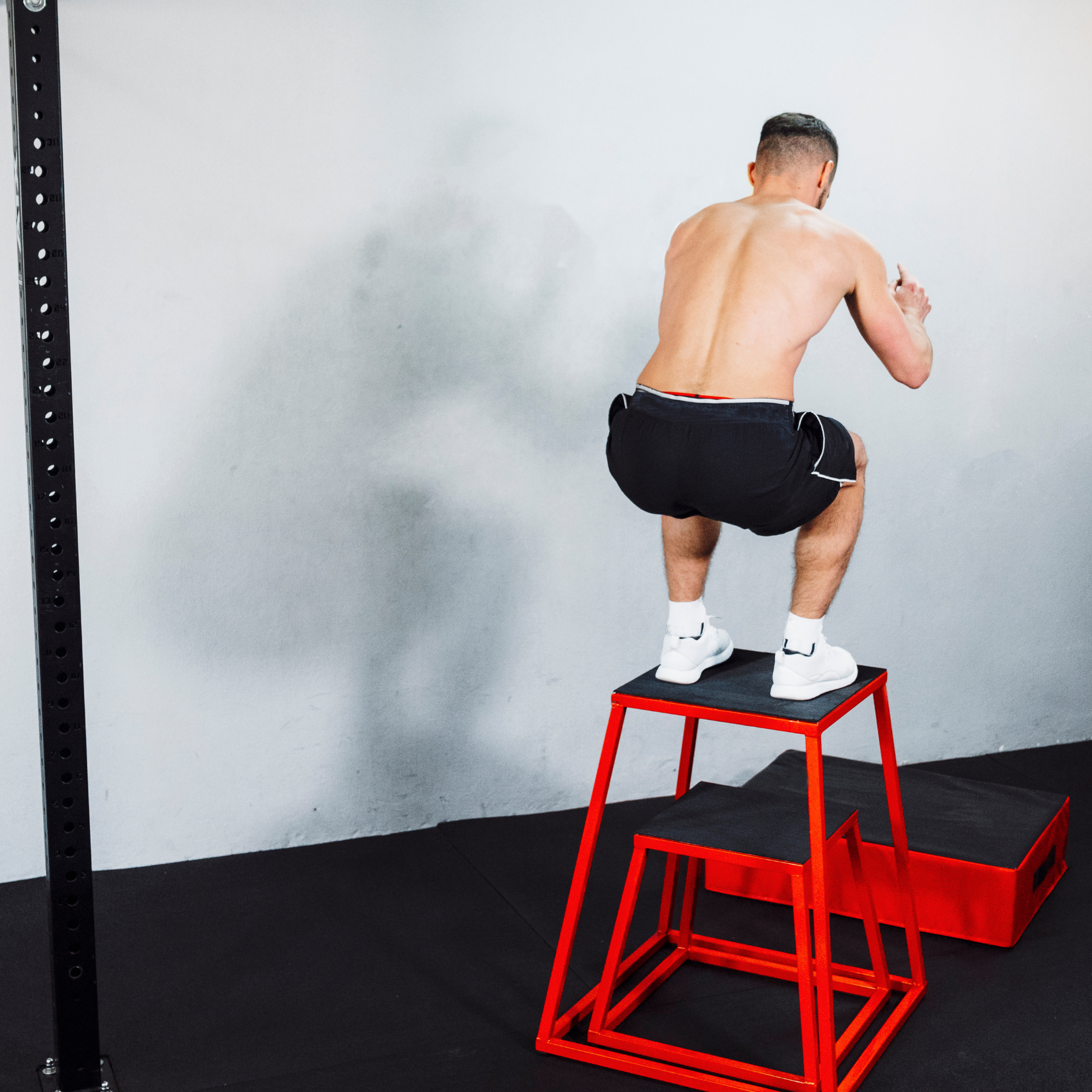
Description
Plyometrics, often referred to as "plyo" or "jump training," is a form of exercise that focuses on explosive, high-impact movements. It involves rapid muscle lengthening (eccentric phase) followed by a quick contraction (concentric phase). Plyometric exercises are designed to improve power, speed, and agility by using the body's stretch-shortening cycle.
Recommended For
Plyometrics are recommended for individuals looking to:
• Increase explosive power and speed.
• Enhance sports performance, especially in activities that require quick bursts of energy (e.g., basketball, volleyball, sprinting).
• Improve lower-body strength and coordination.
• Enhance overall fitness and cardiovascular conditioning.
• Athletes, particularly those involved in sports like track and field, basketball, and soccer.
Benefits
The benefits of plyometrics include:
• Improved explosive strength.
• Increased power and speed.
• Enhanced agility and coordination.
• Better bone density and joint stability.
• Potential for fat loss and cardiovascular fitness.
• Enhanced athletic performance.
• Improved muscle tone and definition.
Contraindications
Plyometrics may not be suitable for everyone, especially those with certain medical conditions or physical limitations. Contraindications may include:
• Joint problems or recent injuries, such as knee, ankle, or hip issues.
• Back problems or spinal conditions.
• Cardiovascular issues or heart conditions.
• Pregnant individuals (plyometrics may be too intense during pregnancy).
• Older adults with limited mobility or balance issues.
How it works
Plyometrics work by capitalising on the stretch-shortening cycle of muscles and tendons. During the eccentric phase (stretching of the muscle), energy is stored in the tissues. This energy is then released during the concentric phase (muscle contraction), resulting in a powerful movement. Plyometric exercises typically involve jumping, bounding, or hopping movements.
Supporting Evidence
Plyometrics have a substantial body of research supporting their effectiveness in improving power, speed, and athletic performance. However, the safety and suitability of plyometrics for certain populations should be considered.
Origin & History
Plyometrics originated in the 1960s in the Soviet Union and was initially used to enhance the performance of track and field athletes. Over time, it gained popularity worldwide and became an integral part of athletic training programs.
Proprietary or generic?
Plyometrics, as a training concept, is not proprietary or trademarked. However, specific plyometric training programs or products may be marketed under unique names or by specific brands or trainers.
For Wellness Business
Staffing
Plyometric training programs can be designed and implemented by qualified fitness trainers, coaches, or sports scientists who understand the principles of plyometrics and can provide proper guidance and supervision.
Training
Fitness professionals can acquire knowledge and training in plyometrics through various certifications and courses offered by reputable fitness organisations and institutions.
Products & Equipment
Plyometrics typically require minimal equipment, including a soft surface or exercise mat, athletic shoes with good support, and sometimes boxes or platforms for jumping exercises.
Facilities
Plyometric training can be conducted in various settings, including fitness centres, sports facilities, or outdoor spaces with proper surfaces. Safety precautions should be in place to reduce the risk of injury.